Salmon fishing to get a
boost
JORDAN
GERRANS Albany Advertiser February 28, 2014, 3:27 pm
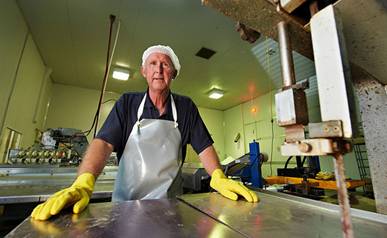 Picture:
Malcolm Heberle Garry Bevan is hoping the
commercial salmon fishing industry can be rejuvenated through better handling
of catches.
Picture:
Malcolm Heberle Garry Bevan is hoping the
commercial salmon fishing industry can be rejuvenated through better handling
of catches.
The south coast commercial
salmon industry has been slowly declining over the past decade, but a new plan
could return the once lucrative industry to its peak.
WA�s salmon catch was as high as 2500 tonnes
as late as 2004, but had fallen to just under 250 tonnes by 2012.
Decreased market demand and cheaper imports,
further aggravated by the high Australian dollar, have aided in the downfall.
In 2013, salmon was at its equal lowest price
in Australia at just over 50 cents per kilo.
However, a new project run through Curtin
University�s Centre of Excellence for Science, Seafood and Health, together
with WA Fishing Industry Council, Fisheries Research and Development
Cooperation and Australian Seafood Cooperative Research Centre, could turn that
around.
Researchers and local fishermen are exploring
placing salmon straight into ice slurries that would improve the quality of the
fish.
Bevan�s Seafood managing director Garry Bevan
said the plan had been in motion for about six months.
�We are going to ice slurry all the fish at
the beaches and get a machine from Queensland to spike the fish for us so that
will improve the quality considerably,� he said.
�We just need to improve the quality. The
traditional method of handling the fish is history.
�We have been doing sampling this year, it is
still in an interim part but we are trying to get the salmon fishery back up
and running.�
Mr Bevan said no one was keen to buy salmon in
the form it was presently handled as it affected the quality of the product.
Curtin senior research fellow Dr Janet Howieson said salmon was underutilised.
�It�s a tricky product because of the short
season and they get very big catches so it�s very hard to look after the fish,�
she said.
�We have done a lot of work on the best
process handling. It will go into ice slurries as soon as caught, kept chilled
and no temperature alteration.�
Mr Bevan said a revitalisation in the salmon industry
would be a financial windfall for the local fishing industry.
�It would generate a considerable amount of
money for Albany,� he said.
Dr Howieson said
eight to 10 new markets had been sought out for the better-handled salmon.
�It would be a change but it would be a
different market than traditional use for Australian salmon as a food, rather
than bait or canning,� she said.
�It must have some health benefits, we just
need to find the customer and handle the product correctly and I think we will
succeed.�